The Horizon of General Intelligence: A 2026 Comprehensive Progress Report on AGI Development

Introduction: The Threshold of Autonomy
As we navigate the middle of this decade, the landscape of Artificial Intelligence has undergone a transformation that few predicted with such accuracy. By early 2026, the industry has transitioned from the ‘Large Language Model (LLM) Era’ to what researchers now define as the ‘Autonomous Reasoning Era.’ The pursuit of Artificial General Intelligence (AGI)—the point at which a machine can perform any intellectual task a human can—is no longer a fringe academic pursuit or a marketing buzzword. It has become a measurable, systematic engineering challenge. This report explores the critical updates in AGI development as of 2026, highlighting the convergence of hardware, architecture, and ethical governance.
The Shift from Predictive Text to Causal Reasoning
In 2024 and 2025, AI was largely limited by the ‘stochastic parrot’ phenomenon, where models predicted the next most likely token without a deep understanding of causality. However, the 2026 class of models has integrated System 2 thinking—a cognitive process characterized by slow, deliberate, and logical reasoning. These systems no longer just ‘output’ answers; they ‘think through’ problems using internal scratchpads and verification loops before presenting a final solution.
This breakthrough is largely attributed to the implementation of Q* (Q-Star) style architectures and advanced tree-of-thought processing. By simulating various outcomes before committing to an action, 2026’s AI agents can handle complex multi-step tasks such as legal discovery, architectural design, and scientific hypothesis generation with minimal human oversight.
[IMAGE_PROMPT: A futuristic laboratory setting with holographic neural network visualizations showing multi-modal data streams converging into a central glowing core, symbolizing the synthesis of different types of intelligence into AGI, high-detail cinematic lighting, 8k resolution.]
Multi-Modal Integration and World Models
One of the most significant 2026 updates is the refinement of ‘World Models.’ Unlike previous iterations that learned solely from text or static images, AGI prototypes now learn from continuous video streams and physical simulations. This has granted AI a sense of ‘object permanence’ and spatial awareness that was previously lacking.
Researchers have successfully bridged the gap between digital intelligence and physical interaction. Through unified sensorimotor transformers, AI models are now capable of understanding the laws of physics—gravity, friction, and torque—allowing them to control robotic hardware with human-like dexterity. This integration is a crucial step toward AGI, as it proves that intelligence is not just about processing symbols but about understanding the environment in which those symbols exist.
Hardware Milestones: The Rise of Neuromorphic and Custom Silicon
The computational demands of AGI led to a crisis in 2025, which has been mitigated in 2026 by the mass adoption of second-generation custom AI chips. Companies have moved beyond general-purpose GPUs to highly specialized ASICs (Application-Specific Integrated Circuits) that mimic the synaptic efficiency of the human brain.
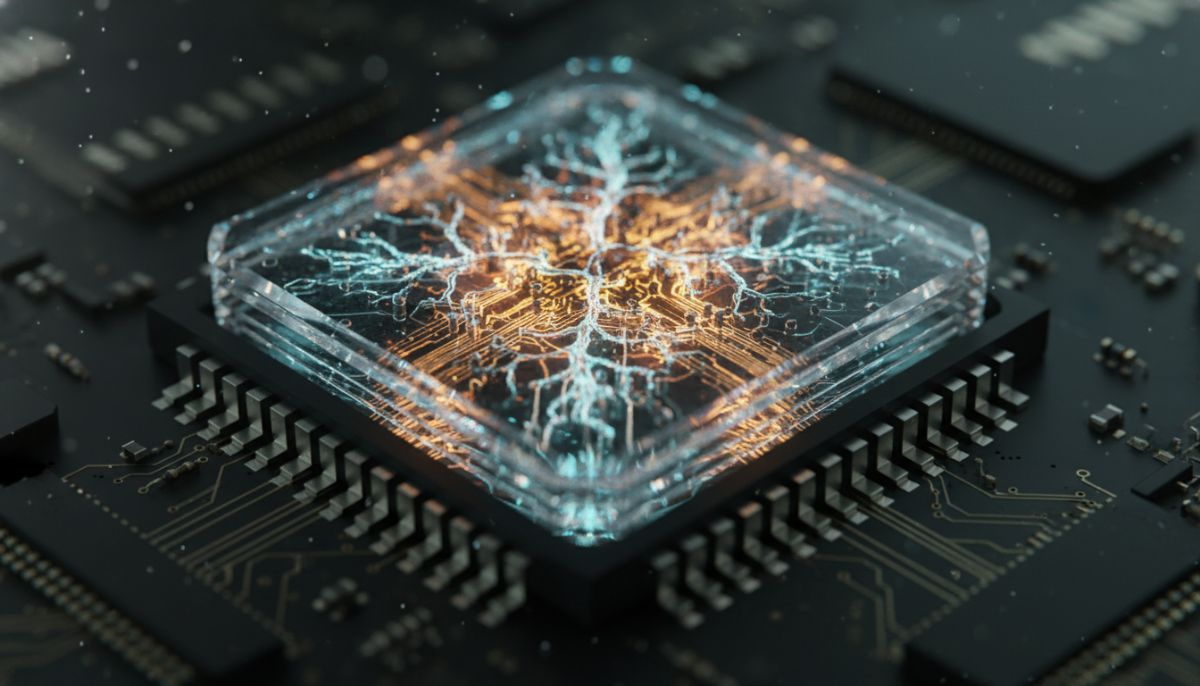
Furthermore, the energy efficiency of these models has improved by a factor of 50x. The 2026 models can run complex inference tasks on local ‘edge’ devices that previously required entire server farms. This decentralization of compute power is accelerating AGI development by allowing for more distributed experimentation and real-time learning across millions of devices globally.
The Role of Synthetic Data and Self-Play
By early 2026, the industry hit the ‘data wall’—the point where human-generated internet text was exhausted. To overcome this, AGI developers pivoted to sophisticated synthetic data pipelines and ‘self-play’ environments. Much like how AlphaGo learned by playing against itself, 2026 models engage in adversarial debates and collaborative problem-solving within virtual sandboxes.
These models generate their own challenges, solve them, and then use the refined solutions as new training data. This recursive self-improvement loop is seen by many as the final engine that will propel AI toward superhuman performance in specific cognitive domains, eventually merging into a generalized intelligence.
Ethics, Governance, and the ‘2026 Safety Accord’
As the capabilities of AI reached unprecedented heights, the global community responded with the 2026 Safety Accord. This international treaty mandates that any system approaching ‘Level 4’ intelligence (as defined by the AGI Scale) must have transparent reasoning traces and ‘hard-coded’ ethical constraints that cannot be bypassed by prompt injection.
[IMAGE_PROMPT: A diverse group of international delegates in a modern, high-tech summit hall, looking at a large transparent display showing a complex flowchart of AI safety protocols and ethical frameworks, professional and serious atmosphere, futuristic architectural design.]
Governance has shifted from passive regulation to active monitoring. In 2026, ‘Alignment Agents’—AI systems specifically designed to monitor other AI systems—have been deployed to ensure that AGI development remains within the bounds of human safety. This ‘AI-watching-AI’ paradigm is the current standard for preventing catastrophic misalignment.
Conclusion: The Road to 2030
While we may not have reached a ‘God-like’ AGI that can solve every human problem instantly, the progress made in 2026 confirms that we are on an irreversible trajectory. The current models exhibit a level of autonomy, reasoning, and multi-modal understanding that was considered science fiction just five years ago.
The focus for the remainder of the decade is no longer on whether AGI will be achieved, but on how we will integrate it into the fabric of society. As we look toward 2030, the 2026 updates serve as a blueprint for a world where human and machine intelligence work in a seamless, unified partnership. The horizon of general intelligence is no longer distant; it is right in front of us, demanding our readiness and our wisdom.